For security reasons, you will be logged out in 4 minutesCannot be added!Your basket contains a blocked quote and must be finalised before you can order other items.Add to basket...Item added to basket
Express
order
Basket0

Medicom Kolmi Hopen : Quelles single-use protective equipment for healthcare and laboratory environments ?

French manufacturer within the Medicom Group, Medicom Kolmi Hopen designs and manufactures single-use protection solutions for demanding environments: surgical masks as well as mob caps, overshoes, gowns and hygiene consumables. With European manufacturing capacity and rigorous traceability, the brand secures supply for hospitals, laboratories and the pharmaceutical, food & beverage and cosmetics industries. Its dedicated non-woven lines and integrated quality control deliver consistent, standards-compliant performance, focusing on comfort, the efficiency of filtration and made in France.
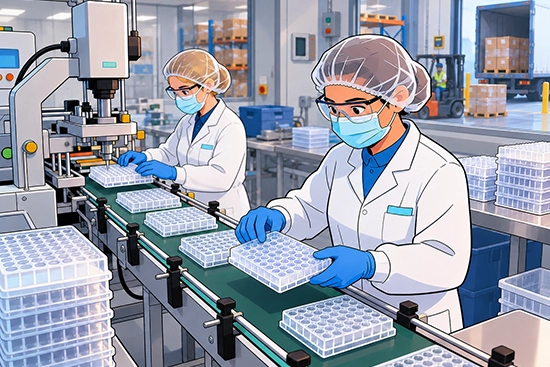
French lab expertise that has become a global benchmark

Based near Angers (Pays de la Loire), the company has spent several decades building unique expertise in single-use nonwovens. After joining the Medicom Group in the early 2010s, it accelerated investment, adding multiple European production lines for masks and personal protective equipment (PPE) to ensure long-term availability. This momentum has strengthened its ties with healthcare facilities, laboratories and critical production sites. Quality, responsiveness and responsibility steer its growth: securing local supply chains, improving product ergonomics, and reducing the environmental footprint of single-use items through eco-design and optimised packaging. All of this is underpinned by a rigorous industrial culture and hands-on technical partnerships forged on the ground.

Expertise and Areas of Specialisation

At Medicom Kolmi Hopen, expertise centres on converting nonwovens (spunbond, meltblown, SMS, PE laminates) into high-performance PPE. Surgical masks are engineered to meet EN 14683 (Types I, II, IIR), balancing bacterial filtration efficiency, breathability and splash resistance. FFP2/FFP3 respirators, Category III PPE compliant with the EN 149 standard and Regulation (EU) 2016/425, deliver reliable aerosol protection while optimising fit and all-day comfort.

For laboratories and production (QC, R&D, pharma, cosmetics, food), the brand offers bouffant caps, beard covers, overshoes, lab coats, sleeve covers, drapes and single-use wipes to control particulate and microbial contamination and protect operators. Materials are selected to minimise fibre shedding, protecting users while optimising comfort and in-use durability of the PPE.

Industrial capability goes hand-in-hand with integrated quality control: filtration tests (BFE/PFE), earloop and nose clip strength, bioburden levels, and batch traceability through to packaging. Products bear the appropriate CE marking (MD or PPE), with the expected technical documentation. A footprint in France and Europe strengthens supply security and shortens lead times. From a CSR perspective, the company focuses on eco-design, packaging format optimisation and the valorisation/recycling of production scrap to combine protection, performance and responsibility.

Medicom Kolmi Hopen laboratory products distributed by Dutscher

Frequently asked questions about the Medicom Kolmi Hopen brand

Where are the products made?
The masks are manufactured in France, near Angers. Other single-use items may be produced in Europe within the Medicom Group network.

Which standards and certifications are covered?
Surgical masks compliant with EN 14683; FFP masks compliant with EN 149, PPE Cat. III with CE marking. Quality system aligned with the requirements of the medical sector.

Surgical or FFP: what’s the difference?
The surgical mask protects the wearer’s surroundings (EN 14683). The FFP mask protects the wearer against aerosols and broader environmental risks (EN 149). The choice depends on the risk and intended use.

Are the products suitable for laboratories and industry?
Yes. Mob caps, overshoes, gowns and masks meet the quality demands of R&D and production in pharma, cosmetics and food.

How is traceability ensured?
Each item has batch traceability and technical documentation. In-process checks ensure consistent performance.

What CSR actions are in place?
Priority for European sourcing, packaging optimisation, eco-design of items and recovery/valorisation of scrap, to limit the footprint of single-use products.